

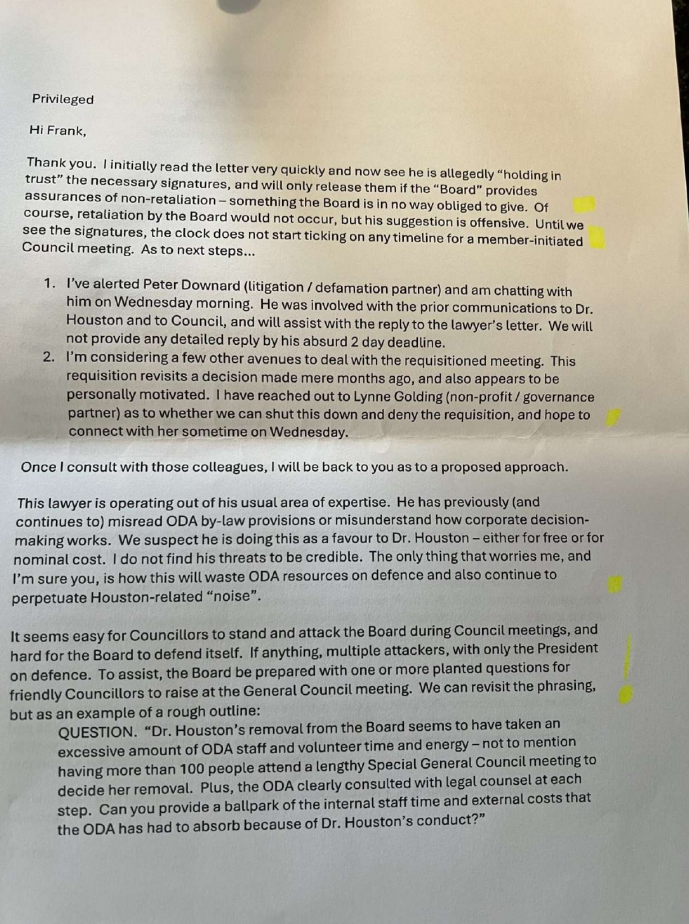
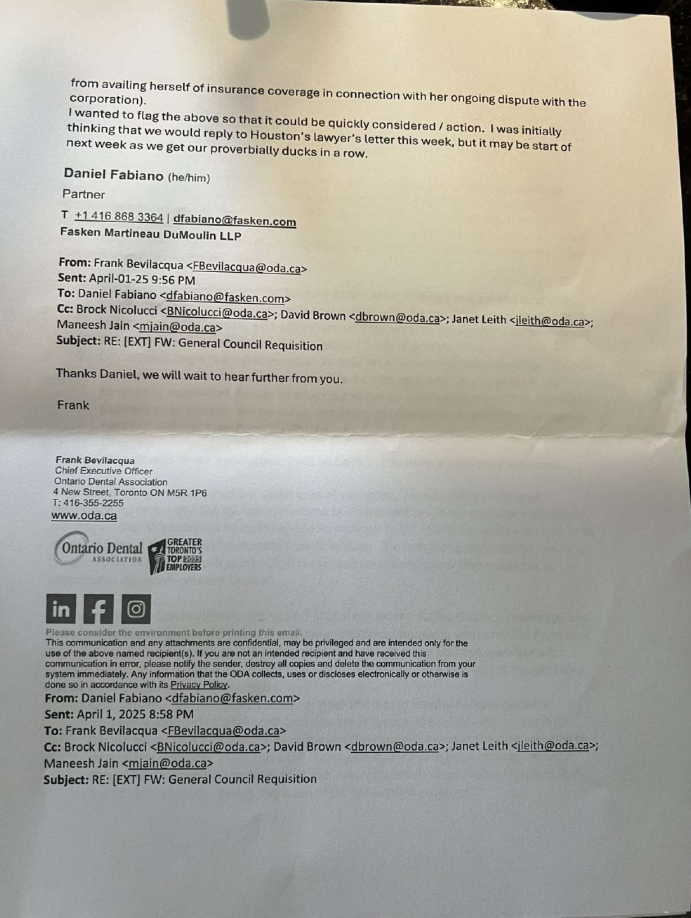
In a leaked exchange, CEO Frank Bevilacqua and long-standing legal counsel, Daniel Fabiano, discuss ways to “shut this down”, referring to a properly requisitioned, member-initiated meeting meant to address the wrongful removal of Dr. Houston. Instead of facilitating the process required under their own by-laws, the correspondence shows them exploring legal ways to derail the requisition entirely.
The email proposes the planting of questions at a General Council meeting to help control the narrative, and to address a glaring concern – the waste of member resources:
“The only thing that worries me [Mr. Fabiano], and I’m sure you [Mr. Bevilacqua], is how this will waste ODA resources on defence and also continue to perpetuate Houston-related noise…To assist, the Board be prepared with one or more planted questions for friendly Councillors to raise at the General Council meeting.“
These internal conversations raise serious questions about how decisions are made behind the scenes. Is this an ODA that values members?
This is just the beginning.
More DentiLeaks coming soon.







16 Responses
this is absolutely outrageous! How can our very own CEO Frank Bevilacqua who works FOR our members be conspiring to undermine our members’ interests. He and our in house legal council from Faskins Dan Fabiano should either resign immediately or our Board of Directors must do their duty to our association and FIRE them with cause. They both have been working against the best interests of the ODA and have contravened the ODA Code of Conduct.
planting questions deliberately to prevent truth from coming out to our members?? Our CEO Frank Bevilacqua may be charged under ONCA By-Laws.
Frank Bevilacqua should resign effective immediately. This is blatant corruption and abuse of his position. For too long he has bleed the ODA dry as a no good numpty.
A Leadership Trying to Silence Its Own Members Is Unacceptable
It is deeply troubling to see senior leadership exploring ways to block a legitimate, member-initiated meeting.
When leaders attempt to delay or deny the very processes designed to hold them accountable, it sends a clear message: they fear member oversight more than they value transparency.
That alone should alarm every member who believes in democratic governance.
Withholding signatures “in trust” to stop the clock on a requisition may be clever, but it is ethically indefensible. Procedural rules exist to protect members, not to give leadership a technical loophole to avoid scrutiny. If leaders rely on tricks instead of trust, what does that say about their respect for the membership?